
Aug 3, 2026Blog
Why Do 40-Hole Pickleball Prices Vary So Much Between Suppliers?
Learn how materials, manufacturing standards, quality control, and certification affect real product value.
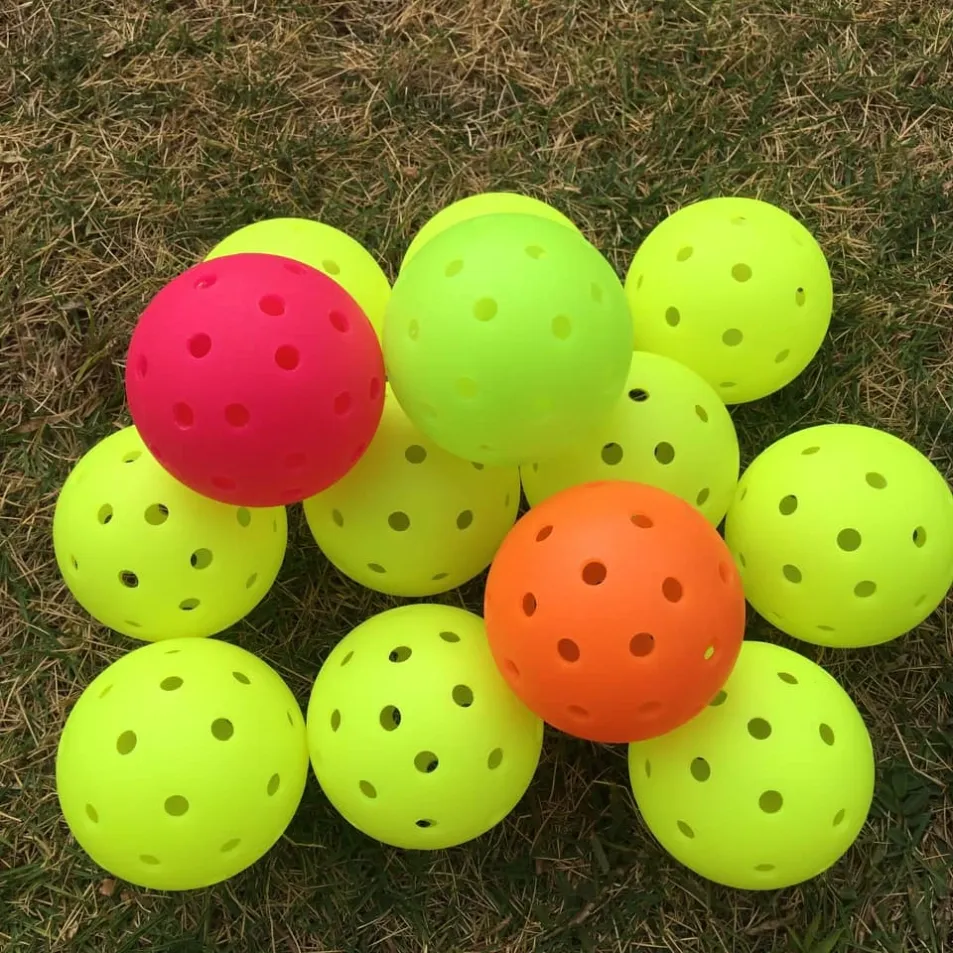
When sourcing 40-hole pickleballs, many buyers experience the same situation:
“Supplier A offers a much lower price, while Supplier B is more expensive. Why is there such a big difference for what looks like the same product?”
This is one of the most common challenges faced by pickleball distributors, sports brands, wholesalers, and importers.
At first sight, two 40-hole pickleballs may look almost identical. However, the real differences often appear after purchase — during testing, customer use, and long-term sales.
The lowest quotation does not always represent the lowest total cost.
1. Different Material Quality Creates Different Product Costs
The material used for a pickleball directly affects:
- Durability
- Crack resistance
- Bounce consistency
- Outdoor performance
- Product lifespan
For competition-level pickleballs, manufacturers need to carefully select suitable plastic materials and control the molding process.
Lower-cost production may reduce material usage or choose different material grades, which can affect the playing experience and durability.
For distributors, this difference can lead to:
- Higher replacement rates
- More customer complaints
- Lower repeat orders
A small difference in unit price can become a bigger cost after the product reaches the market.
2. Manufacturing Precision Affects Playing Performance
A professional 40-hole pickleball is not just a plastic ball with holes.
The production process requires control of:
- Ball weight
- Diameter
- Roundness
- Hole design
- Bounce performance
- Batch consistency
When selling pickleballs to clubs, tournaments, or serious players, consistency is critical.
Imagine a customer purchasing 100 dozen balls and finding that different batches have different bounce performance. This creates a much bigger problem than the original price difference.
3. Certification and Quality Control Matter for Professional Markets
For buyers targeting professional players and competitive markets, product verification is important.
Before choosing a supplier, buyers should ask:
- Does the product meet competition-level requirements?
- Can the supplier provide testing documents?
- How does the factory control quality between batches?
- Are samples consistent with mass production?
A lower quotation may come from a different quality standard or a different level of inspection.
The key question is not only:
“How much does one ball cost?”
It is:
“What level of quality am I receiving for that price?”
4. Factory Capability Influences Supplier Pricing
Different suppliers have different production capabilities.
Price differences may come from:
Production experience
Experienced manufacturers usually have better control over production stability and defect rates.
Quality management
More inspection steps require additional time and cost but help reduce quality problems.
Customization capability
For brands and distributors, services such as:
- Custom logo printing
- Customized packaging
- Color options
- Stable long-term supply
can also affect pricing.
5. The Cheapest Supplier May Not Be the Lowest-Cost Choice
Many buyers focus on the initial purchase price.
However, the real sourcing cost includes:
Product price + quality risk + replacement cost + customer satisfaction
A cheaper pickleball that creates complaints or returns may eventually cost more.
For businesses building a long-term pickleball brand, product consistency is often more valuable than saving a few cents per ball.
6. How Should Buyers Compare 40-Hole Pickleball Suppliers?
Before making a decision, professional buyers should compare more than just quotations.
Consider:
✔ Product samples
✔ Material quality
✔ Weight and size consistency
✔ Bounce performance
✔ Durability testing
✔ Certification documents
✔ Factory production capability
✔ Communication and after-sales support
A reliable supplier should be able to explain not only the price, but also what creates the value behind the price.
Conclusion: The Difference Is Not Only the Price
When different suppliers quote different prices for 40-hole pickleballs, the difference usually comes from the standards behind the product.
For wholesalers, distributors, and sports brands, choosing a supplier is not only about finding the lowest price.
It is about finding the right balance between:
- Quality
- Consistency
- Performance
- Reliability
- Long-term business value
A professional pickleball supplier helps buyers reduce risk and build customer trust.